Better Brain Health



Topics …
- 4.1 Whole brain health
- 4.2 Activities that are good for your brain.
- 4.3 Food and nutrients that are good for your brain
- 4.4 What’s bad for your brain.
- 4.5 How your gut affects your brain
- 4.6 Mood disorders
- 4.7 Cognitive decline
- 4.8 Dementia
4.1 Whole-brain health
What you do, and don’t do, has a significant influence on “whole-brain” health, a term that is used to refer to the totality of the brain’s functions. It includes “cognitive” processes (how well we think, including our ability to learn, remember, focus, solve problems and make decisions); “autonomous” processes (which regulate heart rate, digestion, respiration, etc); and “subconscious” processes (mental activities that occur below the level of awareness, such as memory, and some functions relating to our emotions and senses).

4.2 Activities that are good for your brain
| Activity | How your brain benefits |
|---|---|
| Balanced nutrient-rich diet | Provides essential building blocks for brain cells and helps maintain mental clarity – see section 2 Diet/Nutrition |
| Cognitive training | Activities like puzzles, brain games and learning new skills stimulate neuroplasticity (brain rewiring) |
| Consistent sleep schedule | Consolidates memory and clears toxins. Disrupted sleep and irregular circadian rhythms adversely affect the microbiome and cognitive well-being |
| Curiosity | Helps your brain stay flexible |
| Lifelong learning | Strengthens neural pathways and therefore brain function |
| Mindfulness and stress management | Lower anxiety, better memory and improved focus. Relaxation, meditation etc help regulate emotions by lowering cortisol levels. Stress adversely affects anxiety and memory |
| Music | Music can reduce stress hormones, lower blood pressure, and improve sleep quality. |
| Positive thinking | Lower stress levels; mental health is improved; helps protect against anxiety and depression (see section 5.2) |
| Posture and expression | Straightening your back, lifting your head and smiling can have a positive effect on your mood |
| Physical activity – daily | Boosts memory, focus and learning by supporting neurogenesis (growth of brain cells) – see exercise below |
| Purpose | Purposeful activity such as hobbies, mentoring and creative pursuits boost motivation and enhance mental clarity |
| Social connection | Staying connected through clubs, volunteering and regular catch-ups boosts mood and cognitive function |
Personal story – the benefits of cognitive training:

JK, a 48-year-old teacher from Perth, noticed her memory slipping and her focus waning. Concerned about her cognitive decline, she consulted a neurologist who recommended incorporating daily brain exercises such as crossword puzzles, Sudoku and mindfulness meditation. She committed to a 30-minute routine each morning.
Over six months, she reported significant improvements in her ability to concentrate and a sharper memory, which was confirmed by follow-up cognitive assessments. This case highlights how consistent mental challenges can support brain health. (Source: Australian Brain Foundation, 2023)
Personal story – the benefits of social connection:
LD, a 70-year-old widow from Hobart, faced increasing feelings of loneliness and mild depression after her husband’s passing. She joined a local book club and began volunteering at community events twice a week. The increased social interaction helped her rebuild emotional resilience and reduced her depressive symptoms. Over time, her cognitive assessments showed stable memory function and improved mood, demonstrating the protective effects of social engagement on mental wellness and brain health. (Source: Dementia Australia, 2021).
Exercise and brain health
Regular movement boosts blood flow to the brain, supports neurogenesis (growth of brain cells), memory and helps regulate mood through endorphin and dopamine release. It also improves sleep quality and reduces systemic inflammation, both critical for long-term whole-brain resilience.
Even modest activity, such as brisk walking or stretching, can yield measurable benefits. The key is consistency and variety – combining aerobic, strength and flexibility exercises creates a well-rounded foundation for brain health. Further reading: Harvard Health: Exercise Boosts Memory.

How exercise increases brain neurons
Research over the last decade has shown that exercise releases proteins called myokines. These benefit physical health by reducing inflammation, stimulating the growth of new blood vessels, improving metabolic help and helping cells cope with stress. They now know that myokines travel to the brain where they help support the growth of new neurons, improve memory and enhance the brain’s sensitivity to insulin – a key factor in reducing age-related cognitive decline.
Personal story – cognitive improvement:
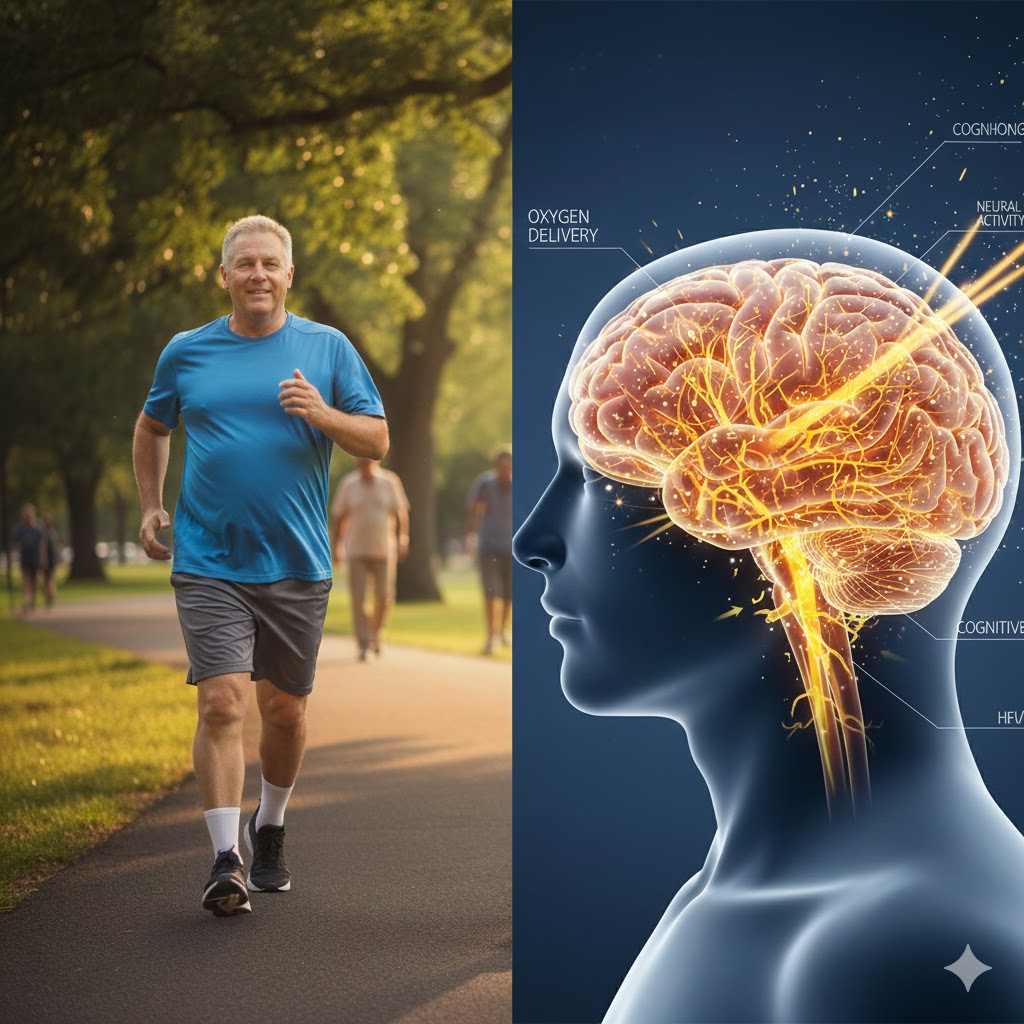
TL, a 62-year-old engineer from Newcastle, was diagnosed with mild cognitive impairment. His doctor recommended regular exercise – walking briskly for 45 minutes five days a week and swimming twice weekly. After 9 months, his mental acuity and mood had both improved. Neuroimaging indicated enhanced blood flow to key brain regions, underscoring the connection between physical exercise and cognitive function. (Source: Heart Foundation Australia, 2023)
Music and mood
Music is a powerful tool for emotional regulation, memory recall and even physical health. Studies have shown that listening to music can reduce stress hormones, lower blood pressure and improve sleep quality. For many people, the right music can shift mood almost instantly. This effect is especially pronounced when the music is personally meaningful – tied to memories, identity or cultural roots. Further reading: Music and blood pressure Healthline: Music Therapy for Dementia

4.3 Food/nutrients that are good for your brain
The nutrients we consume directly affect brain chemistry, cognitive function , energy levels, emotional stability and our ability to regulate stress (see section 2.7 – Diet and stress). Further reading: Probiotics and brain health
| Nutrient | Common Sources | Cognitive & Emotional Benefits |
|---|---|---|
| Amino Acids (e.g., tryptophan, tyrosine) | Turkey, tofu, dairy, bananas | Building blocks for serotonin and dopamine, important mood chemicals |
| Antioxidants (Vitamin C, E, polyphenols) | Berries, citrus fruits, green tea | Protects brain cells, improves focus, slows cognitive decline |
| B Vitamins (especially B6, B9, B12) | Leafy greens, legumes, eggs, fortified cereals | Enhances energy metabolism, reduces brain fog, supports emotional balance |
| Magnesium | Pumpkin seeds, spinach, dark chocolate | Calms the nervous system, aids sleep, reduces anxiety |
| Omega-3 Fatty Acids | Fatty fish (salmon, sardines, mackerel); flaxseeds; walnuts; Chia seeds | Supports learning, memory, reduces inflammation, stabilizes mood and may reduce the risk of age -related decline |
| Prebiotics | Garlic, onions, leeks, bananas, asparagus, oats and legumes | Enhanced emotional regulation – see 4.5 below: a healthy gut microbiome has been linked to sharper memory and reduced anxiety. |
| Probiotics | Fermented foods – yogurt with live cultures, kefir, sauerkraut, kimchi, miso and kombucha | They produce neurotransmitters like serotonin and dopamine which influence your emotional balance. |
| Protein | Eggs, fish, legumes, lean meats, Greek yogurt, nuts and seeds | Emotional balance – proteins support serotonin (for calm) and dopamine (for motivation); improved memory and neuroplasticity—the brain’s ability to form new connections |
Personal story – diet and brain health:

MN, a 65-year-old retiree from Brisbane, experienced frequent episodes of brain fog and difficulty focusing. He adopted a Mediterranean-style diet rich in omega-3 fatty acids from fish, antioxidants from berries and leafy greens like spinach and kale. He also eliminated processed foods and reduced his sugar intake. After a year, MN noticed clearer thinking, improved memory recall and increased energy levels. His blood tests showed reduced inflammation. (Source: CSIRO Health & Nutrition, 2022).
4.4 What’s bad for your brain
Over time, each of the factors listed in the following table will adversely affect the functioning of your brain if nothing is done about it. A combination will be especially damaging.
| What to avoid | What to do about it |
|---|---|
| Chronic stress | Practice mindfulness, exercise, and maintain social support |
| Digital overload | Take screen breaks, set boundaries, and engage in offline activities |
| Emotional turbulence | Practise mindfulness and seek some support if necessary |
| Excess alcohol | Limit intake, hydrate regularly, and seek support if needed |
| Exposure to toxins | Avoid known toxins, use protective gear, and detox safely |
| Negative thoughts | Use cognitive behavioural techniques and seek professional help |
| Poor nutrition | Eat a balanced diet rich in whole foods and essential nutrients |
| Sedentary lifestyle | Incorporate regular physical activity into daily routine |
| Sleep deprivation | Establish a regular sleep schedule and improve sleep hygiene |
| Social isolation | Foster connections through community, family, and friends |
4.5 How your gut affects your brain
The gut plays a major role in shaping how the brain feels and how well it functions. This is because the gut produces substances (often called “chemical messengers”) that help regulate mood, stress and cognitive function. This happens via a two-way communication system between the gut and the brain (the “gut-brain axis “) that is responsible for sending chemical signals from the gut to the brain, and vice versa. For example, the gut produces about 95% of the body’s serotonin, a chemical that regulates mood, motivation, sleep and emotional balance.
To function effectively, and produce sufficient serotonin, the gut needs sufficient numbers and variety of bacteria. These bacteria come from a variety of fruit, vegetables, legumes, grain, nuts and seeds, including foods that contain probiotics and foods that contain probiotics (see section 2.5).
When the gut is healthy and diverse, the signals that are sent to the brain via serotonin support stable mood and clear thinking. But when gut is disrupted – through illness, stress, poor diet or antibiotics – serotonin production, and the signals to the brain, can become irregular and cause stress, irritability, low mood and impaired memory. It can also contribute to conditions such as depression and anxiety.
Even though serotonin is produced by the gut, the gut microbiome plays a major role in regulating how much is produced and how it’s used. When the gut microbiome becomes unbalanced, it can trigger inflammation in the gut and throughout the body. Inflammation can adversely affect, mood, mental well-being and the functioning of your immune system.
Studies indicate that chronic gut inflammation may contribute to the development of neurodegenerative diseases such as Alzheimer’s and Parkinson’s. Even mild neurodegeneration – damage to or dysfunction of brain cells – can significantly affect memory, thinking, movement and emotional regulation.
The relationship between the gut and your microbiome is explained in section 2.5. Further reading: Your microbiome and mental health
Personal story – food diversity and mental health:
EB, a 44-year-old IT specialist from Melbourne, Australia, struggled with brain fog (unclear thinking, difficulty concentrating and memory lapses), mood swings and fatigue for several years. Despite trying various supplements and therapies, her symptoms persisted.
After consulting a nutritionist, she learned that her diet lacked diversity in vegetables and was low in prebiotic and probiotic foods, which are crucial for a healthy gut microbiome. She included in her diet a wider variety of vegetables and added fermented foods such as kimchi and natural yogurt. Within a few months, she noticed significant improvements in her mental clarity, mood stability and energy levels. Source: a 2025 study published in the Australian Journal of Health Sciences Learn more about microbiome and brain health.

4.6 Mood disorders
Mood disorders – including depression, anxiety, and stress-related conditions – are more common in older adults. They stem from emotional distress rather than structural brain changes (such as those involved in cognitive decline), which makes them easier to treat.
Stress related mood changes
Prolonged stress can elevate cortisol and disrupt serotonin and dopamine balance, significantly affecting mood. People can swing between irritability, sadness, anxiety and emotional numbness. Activities that were once enjoyable may lose their appeal. Feelings of hopelessness or helplessness can emerge, especially when problems feel overwhelming. Fatigue and poor sleep often make things worse. Ideally the source of the stress needs to be removed; realistically it may need to be managed: see section 6.2 – Stress management.
Situational anxiety
Worry, tension or fear about a particular situation that is disproportionate to the situation. When the source disappears, the anxiety usually disappears. Knowing the type of situations that trigger this, and preparing for it with relaxation techniques such as deep breathing and meditation may help. If not, seek professional support. Further reading: Situational anxiety and treatment
Clinical anxiety
This involves persistent nervousness, panic attacks, avoidance behaviours, and physical symptoms such as heart palpitations, shortness of breath, irritability, restlessness, or difficulty concentrating. It may be triggered by specific situations or it may be more generalised. Professional help is usually required. Further reading: Strategies for managing anxiety.
| Feature | Clinical anxiety | Situational anxiety |
|---|---|---|
| Duration | Persistent (6 months or more) | Temporary |
| Triggers | Often vague or multiple | Specific and identifiable |
| Impact | Impairs daily life | Disruptive but manageable |
| Resolution | Requires treatment or therapy | Resolves with the situation |
| Examples | Constant worry about health, finances, relationships | Nervousness about speaking in public; driving when overseas; etc |
Depression
Depression is more than just feeling sad or despondent – it is a persistent and often debilitating condition that affects mood, energy, sleep and motivation. Symptoms include ongoing sadness, loss of interest in activities, changes in appetite or sleep, fatigue and feelings of worthlessness. Depression differs from temporary emotional states and from other mental health conditions such as bipolar disorder, which includes alternating periods of depression and elevated mood. If symptoms last more than two weeks or interfere with daily life, professional help is recommended. If you want to do a test at home to see whether or not you are perhaps suffering from depression, you may want to try the Black Dog Institute depression test.
4.7 Cognitive Decline
There are quite a lot of early warning signs that may indicate cognitive decline, but they are often subtle and/or gradual, and therefore commonly overlooked until they start to interfere with daily functioning. Because early diagnosis can make a significant difference to treatment and recovery, it’s important to check with your doctor just in case any of the following are symptoms and not just part of ageing or the result of tiredness:
- Difficulty reasoning
- Concentration problems or reduced attention span
- Emotional instability
- Fatigue
- Memory problems
- Mood changes including irritability
- Speech changes such as difficulty finding the right word
Screening for cognitive decline
Genes can offer clues about future cognitive health, and specific genetic tests can determine your risk profile, but genetics is not conclusive. It is just one piece of the puzzle. The important thing is to get tested if there are any signs – early detection can lead to better outcomes. Basic screenings are available through GPs and can be bulk billed. More advanced screening may require referral and out-of-pocket expenses.
Personal story – the benefits of early detection:
BF is a retired teacher from Queensland, known for his decades-long dedication to education and community service. Born in the mid-1950s, he remained active in his local community but began experiencing subtle memory lapses and difficulty concentrating, which gradually impacted his daily life and independence. Early recognition of these symptoms by his family led to timely cognitive assessments and diagnosis. This early detection enabled him to access support services, cognitive therapies and lifestyle interventions that slowed the progression of his condition and improved his quality of life. His story underscores how proactive monitoring and early intervention can make a significant difference for individuals facing cognitive decline.
Decline of other brain functions
While cognitive decline is usually associated with changes in memory and reasoning, it can also affect the brain’s automatic and subconscious systems – such as sleep regulation, stress response and autonomic functions like heart rate and digestion. Changes may be indicated by symptoms like fatigue, emotional instability and ‘brain fog’ and can offer early clues to broader neurological changes.
Hearing changes
Compromised hearing can lead to an increased risk of cognitive decline and dementia. Even mild hearing loss over time doubles dementia risk, and it’s not just limited to older people. It affects 20% of people in their 20s and continues to increase as we age – up to 80% of people in their 80s. Andrew Campbell’s book Hearing and Brain Health explores this connection in depth, highlighting how loss of hearing can lead to cognitive overload, social isolation and brain atrophy – when the brain has to work harder to decode unclear sounds, it diverts resources away from memory, attention and executive function. Social withdrawal due to hearing challenges further limits mental stimulation, compounding the risk. The use of hearing aids can help preserve brain health and overall wellbeing. Further reading: NIH: Hearing Aids Slow Cognitive Decline
4.8 Dementia
Dementia is a broad term for a group of conditions, such as Alzheimer’s disease, that affect memory, thinking and social abilities severely enough to interfere with daily life. Early recognition and diagnosis are critical, but this is complicated because many people attribute changes that may be indicative of dementia to normal ageing, over-tiredness or just having a bad day. If the changes came on quickly, people would be more inclined to get tested but they creep up slowly, sometimes over decades, and just become part of life – that is, until the cognitive decline becomes obvious, and starts to affect quality of life and independence.
The risk is very low until the mid-60s when it starts to rise significantly. By the mid-70s the rate of increase accelerates – about 7% of people in the 75 to 84 age group have dementia. In the 85 to 94 age group, about 1 in 5 people are affected.
Early warning signs of dementia
- Memory loss, especially for recent events (e.g. forgetting conversations or misplacing items)
- Difficulty concentrating or solving problems
- Language issues, such as struggling to find words, mixing up words or following conversations
- Mood or personality changes, including increased irritability, anxiety or apathy
- Reduced judgment, such as poor financial decisions or neglecting hygiene
- Changes in gait and balance and difficulty walking in a curve
- Falls are especially indicative of our susceptibility
- Withdrawal from social or work activities
- Confusion about time or place – spatial disorientation e.g. getting lost in familiar settings; difficulty judging distances and relationship between objects such as misjudging the edge of the bed when trying to sit down; mixing up directions (left/right; north/south) – which becomes worse in unfamiliar surroundings.
Further reading: Early Signs of Dementia: What to Watch Out For
Screening
Early testing is recommended as soon as symptoms are noticed, especially if they’re persistent or worsening. Timely diagnosis can open doors to support, planning and sometimes treatments that can slow progression. Here is a simple test that you could do at home – Risk Assessment
Music and dementia
For people with Alzheimer’s disease, and other forms of dementia, music from earlier life stages can unlock responsiveness that is otherwise difficult to access. Research confirms that musical memory often remains intact even as other cognitive functions decline. Familiar songs can evoke emotional reactions, spark conversation, and foster a sense of connection – sometimes more effectively than spoken words. Music therapy, when guided by trained professionals, has been shown to improve mood, reduce agitation, and support cognitive engagement in dementia care. Importantly, not all music is equally beneficial – personalized playlists tailored to individual preferences and life history are key to maximizing therapeutic impact. Further reading: Music and dementia