Healthy people have better habits

Topics …
9.1 What are these healthy habits?
Below is a brief summary of a variety of “healthy habits”. Suggestions about what people of your age group should focus on can be found in the relevant section for your age – 20s; 30s; 40s; 50s; 60s; 70s; 80s and 90s.
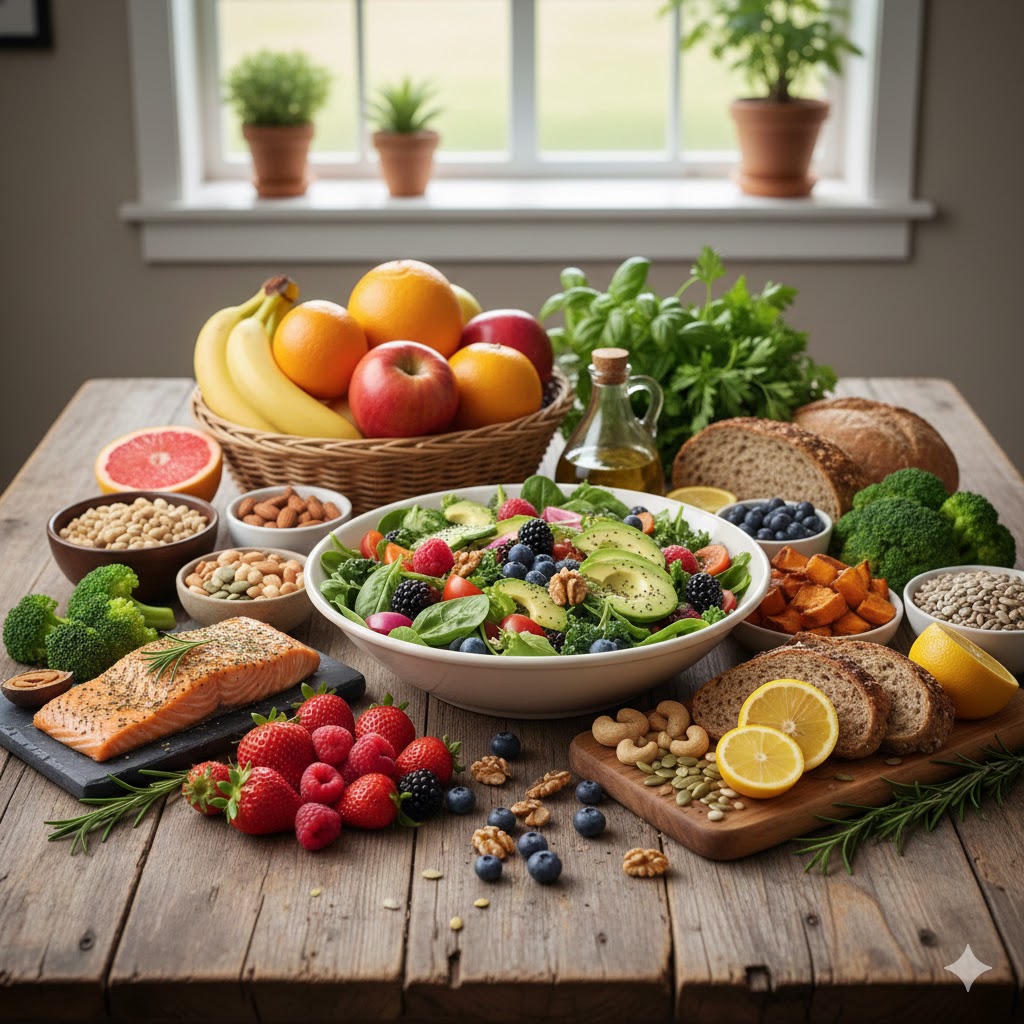
Nutrition (section 2)
- Eat a variety of vegetables and legumes
- Reduce ultra-processed foods and added sugars
- Stay hydrated – make water your primary drink
- Practise mindful eating (slow down – enjoy it more)
- Include fermented foods, fibre, prebiotics and probiotics for gut health
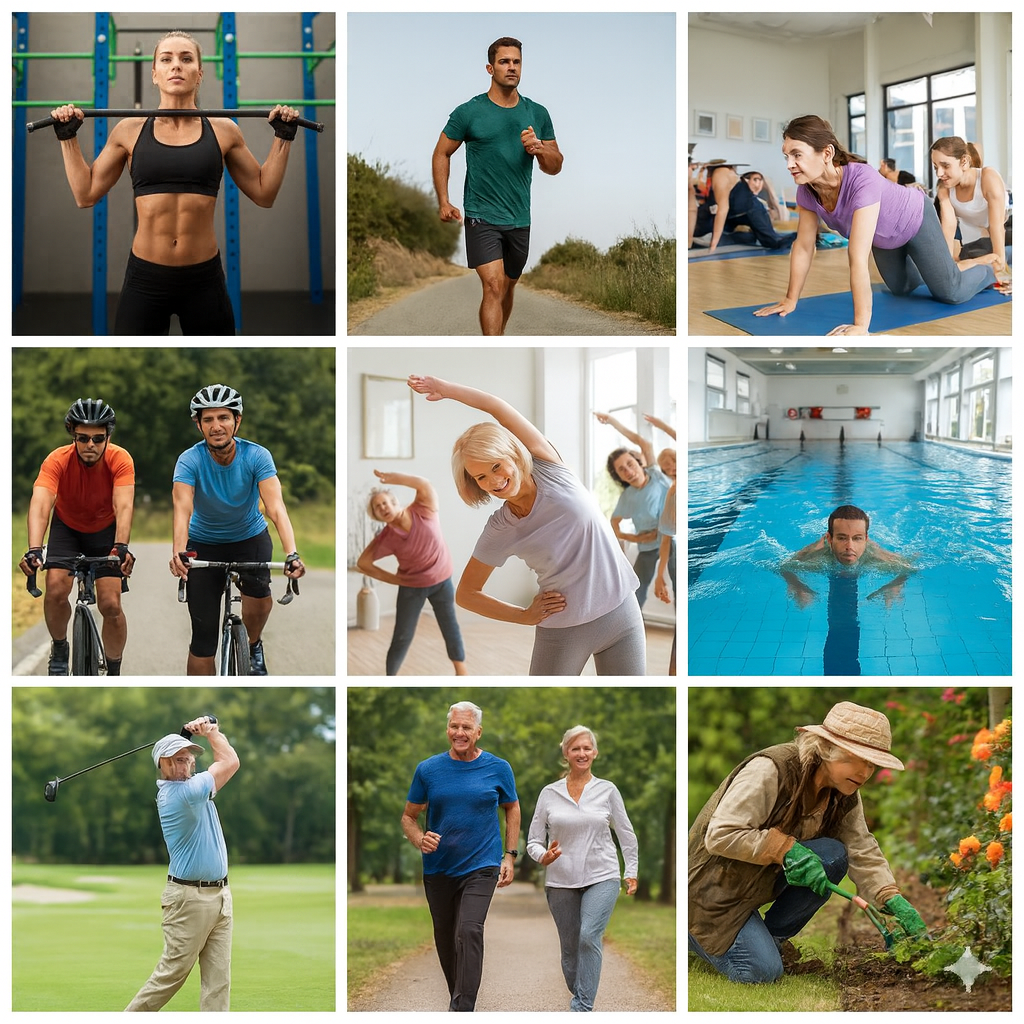
Physical activity (section 3)

- Do something daily (going for a walk counts)
- Add strength training, preferably twice a week
- Stretch regularly to maintain mobility
- Break up long periods of sitting
- Explore joyful movement – dance, gardening, swimming
Sleep & recovery (section 6.1)
- Aim for 7–9 hours of quality sleep
- Keep a consistent sleep schedule
- Create a calming bedtime routine
- Limit screens and stimulants before bed
Mental & emotional health (section 4)
- Aim for 7–9 hours of quality sleep
- Keep a consistent sleep schedule
- Create a calming bedtime routine
- Limit screens and stimulants before bed

Preventative health (check your age group)
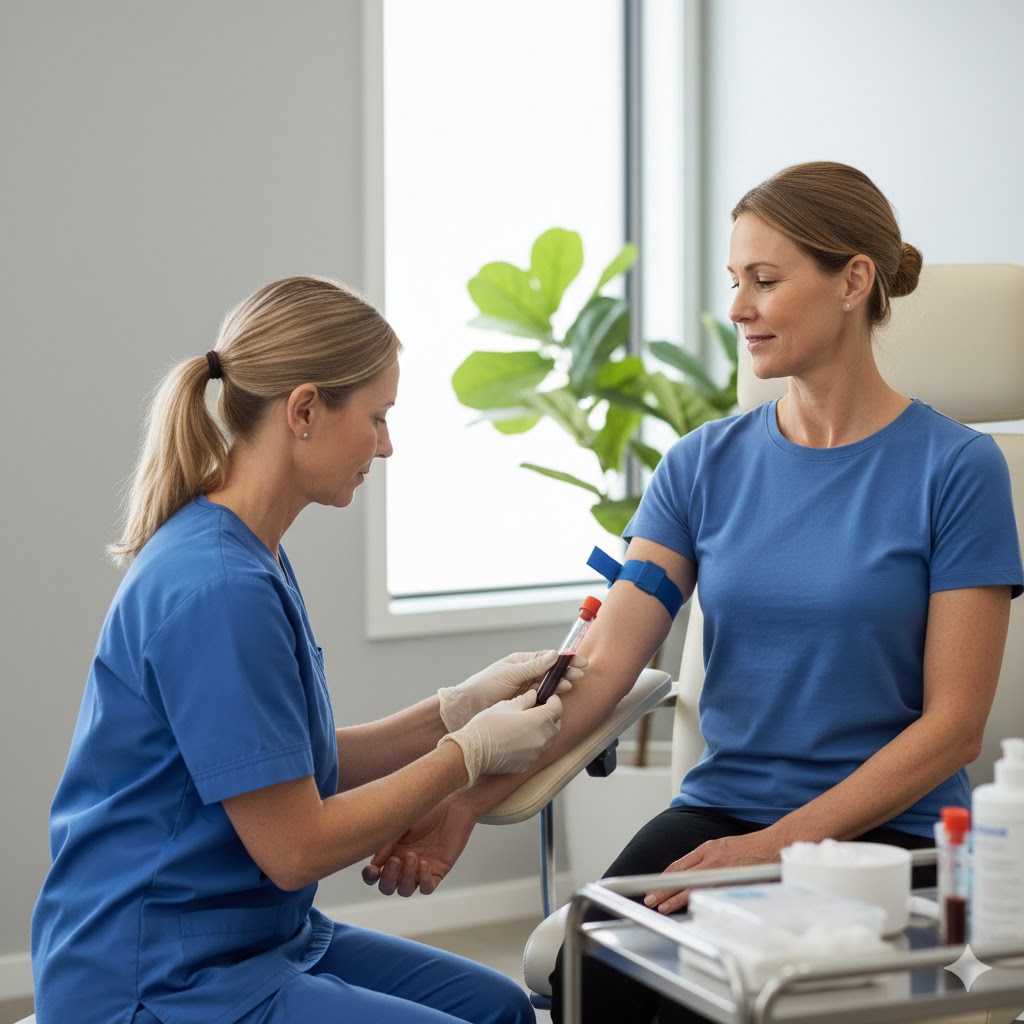
- Schedule regular check-ups and screenings
- Track key health metrics (e.g. blood pressure, cholesterol)
- Know your family history and risk factors
- Stay up to date with vaccinations
Proactive health planning (below)
- Make a proactive plan and track progress
- Revisit your goals regularly
- Keep track of any early warning signs
9.2 One step at a time
You don’t need to change your lifestyle overnight. In fact, doing too much can be counter-productive because it increases the risk of failure. You just need to embark on one good practice, like eating a wider variety of vegetables to nourish your microbiome.
Ideally, you will also address one bad habit, like cutting back on highly processed foods. Consistency is the key – keep doing it and it will become a routine, then a habit.
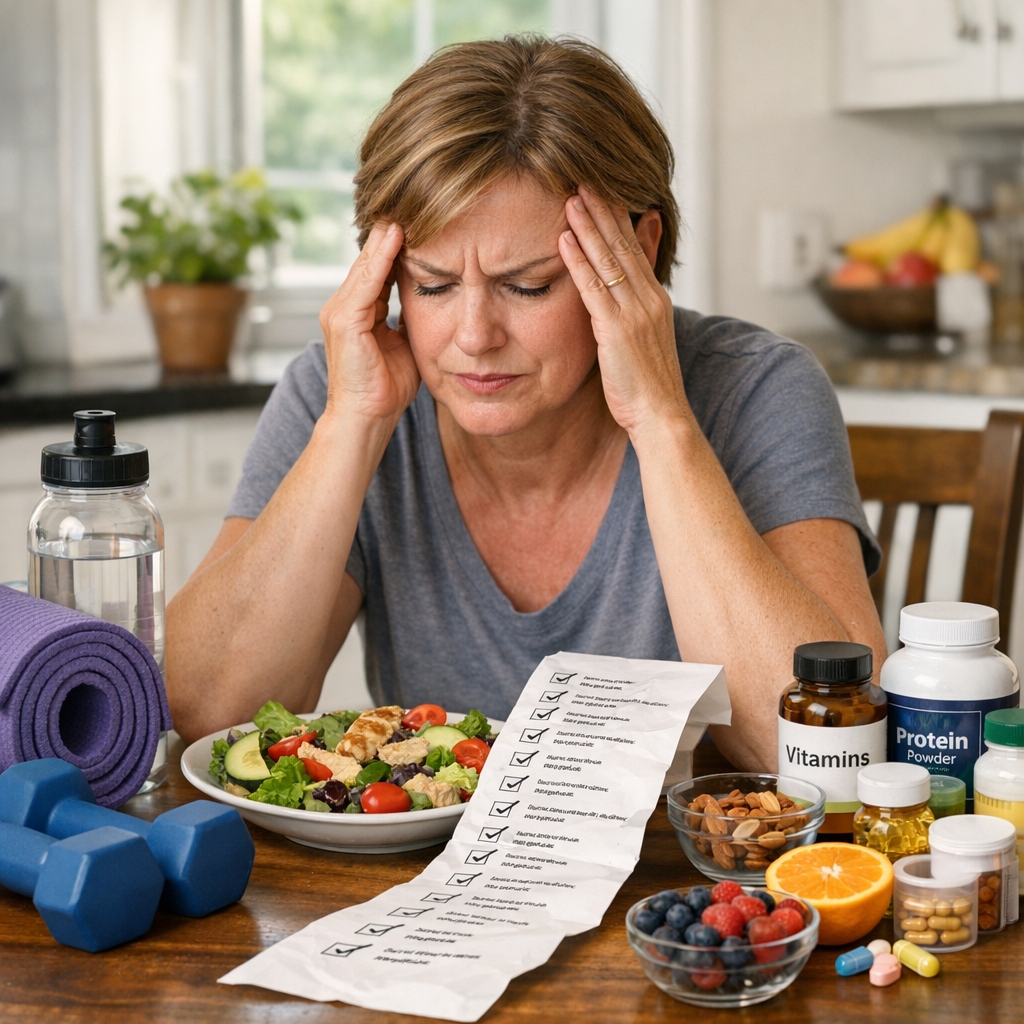
And that’s what you’re aiming for because healthy people have better habits.
When your first step becomes second nature, you can add another, perhaps a bit more exercise. Or, if you are one of those people who are able to adopt several new practices at once, just make sure they’re sustainable otherwise you are likely to relapse into old habits.
When you start, you might not feel better right away. That’s normal. Health improvements are often gradual and hard to notice day-to-day. But, over time, they add up. For some people, it doesn’t matter that there is no obvious short-term reward because the knowledge that practising proactive health is going to reap significant long-term benefits is enough to keep going. For others, it’s a good idea to track your progress towards good proactive health practices (see Tracking in section 10.2).
Personal story – one step at a time:
IK, 29, from Brisbane began her proactive health journey by rapidly cutting out gluten, sugar and other food groups to manage inflammation and brain fog linked to childhood steroid toxicity. Initially hopeful, she soon felt isolated and overwhelmed. Social events became stressful, and her mental health declined. After years of restrictive dieting and failed attempts, IK restarted her proactive health journey slowly – one step at a time – thereby making the changes sustainable.
9.3 How to gain/sustain healthy habits
- Aim small initially: Set goals that are realistic, achievable and sustainable. Don’t aim too big at first. Instead of “I’ll walk 5km every day,” start with “I’ll walk around the block after breakfast on Tuesdays and Fridays.” Then increase it gradually.
- Expect resistance: Adopting new habits may trigger some discomfort. If so, just acknowledge it: “This feels hard today, but I’m still going to finish it because it will be easier next time.”
- Goals should be specific: The likelihood of achieving a general goal such as “I’m going to eat more healthily” is more difficult to achieve, and certainly more difficult to measure, than setting a specific goal such as “I am going to have a salad for lunch every second day”.
- Plan what you are going to do and when: There is a template you can use for making a Proactive Health Plan in section 10.1.
- Make it visible: Out of sight often means out of mind. Leave notes of what you plan to do around the house, or set a reminder on your phone
- Positivity (see section 5.3 – Positive Thinking): For example, instead of thinking that salads are uninteresting and lacking flavour, just focus on the benefit you will derive (e.g. it’s good for the microbiome) and remind yourself that, in time, it will also start to taste much better to you, and you’ll end up preferring salads to fast food.
- Reframing: Try to look at any setbacks as a temporary pause on the way to a better outcome. My favourite story about reframing involves Thomas Edison who was known for reframing setbacks as progress. When it was suggested that he had failed to invent the light bulb one thousand times, he is reputed to have replied “I didn’t fail 1,000 times. I just found 1,000 ways not to invent the light bulb.”
- Reward yourself on the way: Don’t wait for dramatic results. Give yourself a pat on the back for adopting and sticking with one new practice for just one week. Positive reinforcement matters, even when it’s coming from yourself!
- Social reinforcement: Tell a friend or family member what your goal is – this increases the likelihood of achieving your objective. In addition, you may want to teach someone else what you’ve learned.
- Track progress: Seeing progress builds motivation (see Tracking in section 10.2).
- Visualisation: By picturing yourself performing a healthy habit and experiencing the benefits, you prime your brain to follow through. This is not pseudoscience. Research shows that visualising goals activates similar brain regions as actually achieving them. This “mental rehearsal” provides extra motivation, focus and confidence in achieving your goals. Even a few seconds of mental rehearsal can make a new habit feel more achievable. Some suggestions are in the table below.
| Category | New habit | Visualisation |
|---|---|---|
| Nutrition | Choose a healthy snack | Picture yourself reaching for a bowl of fresh fruit and feeling proud of your choice |
| Movement | Go for a walk | See yourself walking through a peaceful park, breathing deeply and smiling |
| Sleep | Stick to a bedtime routine | Imagine yourself waking up refreshed and proud of your consistency |
| Stress | Pause before reacting | Visualise yourself responding calmly and wisely in a challenging moment |