Better health in our 70s




Some keys for thriving in our 70s include:
Snapshot of the 70s
Our 70s is a decade where the benefits of good health habits – or the consequences of neglect – start to catch up with us.
The good news is that most age-related challenges in our 70s are manageable and the odds of keeping healthy remain in your favour if you take a proactive – rather than a reactive – approach.
Even small adjustments can make a big difference – not just by reducing the risk of future health problems (such as heart and cardiovascular disease, cognitive decline and a variety of illnesses) but also by improving your quality-of-life and well-being.
To work out what adjustments are likely to be of the most benefit for you personally, it’s a good idea to know what your future health might have in store for you.
This is not crystal ball gazing. It involves some simple tests – most of which can be done at home – that will enable you to assess aspects of your current health that are predictors of future health.

Predicting future health and quality-of-life is not crystal ball gazing
70s Topics …
- Health challenges and building resilience
- Predictors of future health
- You can shape your future health
- Other factors for current and future health
- Risks and warning signs
- Screenings & check-ups
- Target heart rate when exercising
- Health records and directives
- Relationships in our 70s
- What to do – today – to improve your health
- Health checklist – for our 70s and ageing well
- Your proactive health plan
- Appendix A. Tests to predict future health
- Appendix B. Physical health issues
- Appendix C. Disease and illness risks
- Appendix D. – Health Guidelines 65+
Health challenges and building resilience
The odds are in your favour

About 7% of Australians are affected by dementia in their 70s; less than 10% will have another type of mental health problem; cancer affects about 15%; even the odds of heart disease and stroke are in your favour despite the risk rising to about 27%. But …
… good health isn’t just about avoiding serious illness. It’s about how you feel every day – your energy, mobility, focus and mood.
Even if your health is currently very good, it can change quickly in our 70s and the odds being in your favour doesn’t help if you are one of the unlucky ones.
The most reliable way to prevent health problems and to feel well, move easily and stay mentally sharp day-to-day is to be proactive.
The sections below explain what proactive steps will strengthen those parts of your health that are likely to matter most for you in the years ahead to protect your ongoing well-being and quality-of-life. Appendices B and C list other health issues that can appear in your 70s – not to alarm you, but to help you stay ahead of them.
Challenges
There will be more changes, and challenges, to our health in our 70s.
Most people will find they have less energy, flexibility and mobility; changes in balance; slower healing and recovery; increased forgetfulness; etc. We also become more susceptible to a growing variety of health risks.
But the main challenge is often inertia – the difficulty of making the changes needed to become proactive, or to extend the healthy habits we already have.

When we stay reactive, cracks can begin to appear. These can accelerate decline, weaken immunity and make recovery from illness slower.
The good news is that the difficulty of making changes is often more perception than reality. It’s not hard – healthy people simply have better habits, and those habits can be learned at any age: Healthy people have better habits.
As explained below, we still have the ability in our 70s to shape our future – if we are proactive. So, if you haven’t fully embraced the proactive health principles in this guide, now is the time.
Even if you follow most of these principles, it’s important to review the key predictors in our 70s of future health – physical activity, cardiometabolic health, mental health and social connection – and make sure they’re in good shape. Small adjustments now can strengthen your resilience and improve your quality-of-life for the years ahead.
Main predictors of future health in our 70s
The following areas of health are strong predictors for people in their 60s of future health and quality-of-life. You may want to read a bit more about each of these areas further down the page or, alternatively, you can skip through to Appendix A that contains the tests that will enable you to know what your current state of health means for your future health and the proactive steps that will build resilience.
There is a preliminary self-assessment test which involves answering one simple question. If you score well, you may not want to do the other tests. If you don’t, the other tests are recommended. These are free, and can be done at home, except for the cardiometabolic tests (cholesterol, blood sugar, etc) that need to be to be arranged with a doctor but can be bulk billed.
1. Physical activity – strength and balance
Low levels of physical activity in our 70s – especially poor strength and balance – are an indication of poorer health and quality-of-life in the years ahead – reduced mobility, higher risk of falls, higher inflammation, slower recovery from illness and decreasing independence. The encouraging news – strength and balance can still improve significantly in your 70s. More below: Exercise.
2. Cardiometabolic health
Getting tested for cardiometabolic markers – blood pressure, cholesterol, blood sugar and triglycerides – in our 70s is very important. Elevated levels predict a higher risk of heart attack, stroke, diabetes, kidney disease and cognitive decline – a strong sign that proactive steps are needed. How this works is described below: Cardiometabolic.
3. Mental activity and social connection
Cognitive activity in our 70s is a powerful predictor of ongoing brain health, emotional wellbeing and longevity: Cognitive engagement. So is social engagement: Social connection. Declines in these areas in your 70s predict poorer outcomes in your 80s, including increased risk of cognitive decline, depression and loss of independence.
You can still shape your future health

What you do in your 70s still matters – a lot – for your future health, independence, confidence and day‑to‑day enjoyment of life. The right habits can preserve mobility, protect brain health, support emotional wellbeing and keep you feeling good.
In other words, we still have the ability in our 70s to shape our future – if we are proactive.
What should you focus on to improve your future health?
For most people in their 70s, focusing on the three areas above will make the biggest difference in shaping their future health, wellbeing and quality of life. But they’re not the only ones that matter – diet and nutrition, stress management, check-ups and sleep quality also play an important role. Each of these areas is explored below.
To understand what is best for you to focus on, the tests in Appendix A will give you an insight into your future health, and the proactive steps to strength it.
Key areas of health that matter most in our 70s
Physical activity
Physical activity will minimise the effects of ageing and should be continued into the 70s and beyond, despite the aches and pains that we experience more often. In fact, the right exercise will help the aches and pains. Particular attention should be paid in our 70s to mobility, balance and fall prevention.
However, most Australians (71.8%) over 64 do NOT meet the recommended minimum physical activity guidelines issued by the Australian Department of Health (see Appendix C below) and 38% did no physical exercise at all during the week covered by the survey.
Aerobic exercise

Aerobic exercise is still one of the most beneficial investments you can make in your 70s for your current and future health.
VO₂ max – how efficiently your body uses oxygen – continues to decline, but regular aerobic activity slows this process and protects against cardiovascular disease, type 2 diabetes, cognitive decline and loss of stamina – all of which become more common in later life.
Aerobic exercise also increases your mitochondria, helping maintain energy,
mood, and day to day resilience. Even moderate weekly activity – brisk walking, cycling, swimming or dancing – helps preserve mobility, balance and independence.
In your 70s, the goal is consistency rather than intensity. Regular movement keeps joints lubricated, supports brain health and reduces the risk of deconditioning after illness or injury.
Intensive exercise
If you’ve maintained a reasonable level of fitness, vigorous exercise can still have a place in your 70s – but it needs to be approached with more strategy and respect for recovery.
Activities such as swimming, cycling, rowing, or modified high‑intensity interval training (HIIT) can still strengthen the heart, improve glucose control and lift energy and mood. The benefits remain substantial.
However, the body’s repair systems work more slowly in this decade. Tendons and ligaments take longer to recover, sleep can be lighter, and joints may be more sensitive to overload. This means shorter sessions, longer warm-ups, longer recovery between sessions and reduced interval intensity (e.g. 20-30 seconds of effort followed by 90-hundred and 20 seconds of more relaxed effort.

Recovery
Recovery becomes more important in this decade because the body repairs itself more slowly than it did when you were younger. Connective tissues such as tendons and ligaments take longer to recover, hormonal shifts influence inflammation and sleep quality, and decades of accumulated load on joints mean that overdoing it can lead to setbacks that take longer to resolve. This means that it’s better to allow extra time between sessions to allow for recovery.
Strength and weight-bearing exercise

Strength and weight‑bearing exercise remain essential.
Weight‑bearing doesn’t mean lifting weights – it simply means supporting your own body weight against gravity. Resistance bands, bodyweight movements, and everyday activities such as walking uphill, dancing, tennis, or stair climbing all count.
Better strength will help preserve muscle mass, bone density, balance and joint stability – all key to maintaining independence.
Two to three sessions per week of resistance training – using bodyweight, bands, dumbbells or machines – is one of the most effective ways to maintain long‑term independence.
Flexibility and mobility – stretching
Stiffness increases even further in our 70s, especially in the hips, shoulders, spine and ankles. Regular stretching and mobility work help maintain range of motion of your joints, reduce discomfort and support better balance and posture.
Dynamic stretching before activity and gentle static stretching afterwards can make everyday movements easier and reduce the risk of overuse injuries. Mobility exercises also help protect tendons and joints, which take longer to recover at this age.
A few minutes each day can make a meaningful difference to comfort and confidence.

There is a lot more information about exercise and its benefits in section 3 of the Guide – Physical activity.
Cardiometabolic health

Cardiometabolic health refers to how well our cardiovascular system (heart and blood vessels) and metabolic system (how your body processes and uses energy) are functioning together.
It’s shaped by factors such as blood pressure, cholesterol, blood sugar, body composition (muscle and fat), inflammation, and lifestyle behaviours like diet, exercise, sleep, and stress.
When all these factors are addressed, and you get regular checkups, as part of your proactive health lifestyle, the risk of problems such as heart disease, stroke and type 2 diabetes is lowered significantly.
Steps to improve cardiometabolic health
- Regular physical activity, both aerobic – cycling, swimming, brisk walking – and strengthening – whether weight-bearing (such as squats, lunges, step ups) or non-weight-bearing (such as machines, resistance bands, Pilates) – improve cardiometabolic health in a variety of ways if done regularly e.g. most days.
- A diet built around whole foods (vegetables, legumes, whole grains, lean proteins and healthy fats) helps stabilise blood sugar and reduces the metabolic strain caused by refined carbohydrates and sugary drinks.
- Limiting added sugars, highly processed foods and alcohol is important. Quitting smoking provides immediate and long‑term benefits for blood vessels and brain health.
- Maintaining a healthy waist circumference is particularly important, as excess visceral fat drives insulin resistance and inflammation (more information about this can be found in the resource section of the Guide here).
- Good sleep and stress management support metabolic balance.
Even modest improvements in these areas can help stabilise blood pressure, cholesterol and blood sugar, reduce inflammation and maintain insulin sensitivity.
High blood sugar and prediabetes
If your blood sugar is heading towards the prediabetic range, in addition to the steps taken above to improve cardiometabolic health in general, it can help to spread your carbohydrate intake more evenly across the day and avoid large, carbohydrate‑heavy meals that cause sharp glucose spikes. Periodic checks of fasting glucose or HbA1c can also provide useful feedback on how your lifestyle changes are working.
Mental activity and social connection
Having a purpose and learning
Purposeful activities such as hobbies, mentoring and creative pursuits have been shown to enhance mental clarity, and boost motivation. Purposeful activities such as hobbies, mentoring and creative pursuits have been shown to enhance mental clarity, and boost motivation. What’s good for your brain.
The other side of the coin is managing cognitive risks, including loneliness: What’s bad for your brain.

Positive thinking helps improve mental health by lowering stress levels and reducing anxiety. Mindfulness can also contribute to good mental health – it helps to reduce forgetfulness, improve concentration and increase situational awareness: Mindfulness.
Social engagement

Social engagement reduces isolation and supports emotional resilience – important factors in avoiding loneliness, which is a major risk factor for depression, and mortality, as we get older.
The evidence is remarkably consistent: people who maintain meaningful relationships, regular social contact, and a sense of belonging experience better cognitive health, better emotional balance, and even lower rates of chronic disease. Social connection reduces stress hormones, supports immune function, and keeps the brain stimulated in ways that solitary activities simply can’t replicate.
Other factors for current and future health
In addition to the main predictors above, other aspects of our health need to be managed for both short-term and long-term health. For example, Diet/nutrition and stress management are particularly important, as explained below. Screenings remain important, especially for bowel, prostate, breast and skin cancer – Checkups – and consistent sleep affect your immunity, your metabolism and your brain.
Diet and nutrition
By our 70s, the body’s systems are more sensitive to nutritional imbalances, and diet becomes one of the most powerful predictors of continued independence and vitality. Poor diet at this stage of life increases the risk of frailty, muscle loss and chronic conditions such as type 2 diabetes, fatty liver, and cardiovascular disease in the years ahead so it is a good idea to double check to make sure you are eating the right foods. But what are the “right” foods?
A balanced diet
Many people think this means avoiding fast or highly processed foods and eating fruit and vegetables. That’s a good start but it doesn’t go far enough – the right diet must include a wide variety, not just of fruits and vegetables, but also a variety of legumes, whole grains and nuts.
This is essential for proper nourishment of your gut bacteria (see section 2.5 – Microbiome), which play such a critical, but underappreciated, role in good health.


Probiotics and prebiotics
In addition to variety, your gut bacteria need food that contain probiotics (e.g. fermented foods such as yogurt) and prebiotics (such as oats and legumes). Without these, your microbiome will lack the requisite diversity and quantity of microbes, which can lead to poor health, including increased anxiety and memory deterioration.
The right diet will also support your metabolism by keeping your blood pressure, cholesterol, blood sugar and weight within a healthy range.
Supporting metabolism and muscle
By the 70s, metabolism slows further, and appetite may decline. The focus needs to be on nutrient density. Protein-rich foods (fish, eggs, lean meats, legumes, tofu) will preserve muscle mass; and vitamins (calcium and vitamin D) are needed to support bone health.
The right diet will support your metabolism and keep your blood pressure, cholesterol, blood sugar and weight within a healthy range.
Mediterranean-style eating
A Mediterranean style diet – vegetables, legumes, whole grains, olive oil, nuts and fish – remains one of the best‑supported diets for older adults. It helps reduce the risk of heart disease, diabetes, fatty liver, and cognitive decline while supporting longevity and quality of life. It’s also important keep processed foods and sugary drinks to a minimum.
Unfortunately, almost 92% of people over the age of 65 do not meet the recommended guidelines for fruit and vegetable consumption.
There is a lot more information about the right diet, including foods that contain the necessary vitamins and nutrients, and weight management, in section 2 – Diet and nutrition.
Stress management
Stress in our 70s is often distinguishable from stress earlier in life, partly because it is not always recognised as stress. It can come from health concerns, reduced independence or changes in social circles. Approximately 15-20% of adults in their 70s experience stress that meaningfully affects wellbeing. If left unaddressed, it can contribute to low mood, cognitive strain and reduced energy. Effective stress management includes regular social contact, enjoyable low‑pressure activities, and routine activities including time outdoors and physical activity.

Risks, early warning signs and symptoms
Many health problems have early warning signs – such as joint pain (an indication of arthritis); breathlessness after mild exercise or chest/arm pain (a possible indication of heart disease); weight gain (can indicate diabetes; heart disease; thyroid); fatigue or mood changes (various possibilities including thyroid dysfunction or nutrient imbalance).

But some don’t. Conditions like osteoporosis, hypertension, type 2 diabetes, cardiovascular disease and quite a lot of others (see section 8 No early Warning Signs) can often develop silently, without any symptoms – which means the 70s is a time to be more diligent about regular screenings and checkups (see Screenings below).
In fact, it’s even more important in our 70s, mainly because the consequences are usually more serious. So please don’t dismiss changes in how you feel as “just ageing” – it may seem insignificant but, sometimes, something minor can be an indication of a more serious problem on its way. On the other hand, it might be “just ageing” and not an early warning sign.
How do you know the difference?
Have a look at the table below that explains signs or symptoms associated with some of the health issues that we face in our 70s. There is also a long list of early warning signs and symptoms in section 7 – Early warning signs – including “what’s normal, and what’s not”. However, many signs or symptoms are indeterminate and can point to different problems, so it is always wise to be sure by checking with your GP.
| Health Risk | Signs or symptoms | Notes |
|---|---|---|
| Arthritis | Pain, swelling and reduced range of motion can affect daily tasks | Up to 1 in 2 people in their 70s are affected by arthritis, a significant increase from the 60s. |
| Cancer | Indeterminate or no early warning signs | Screening for bowel, breast skin and prostate cancer continue to be important in the 70s |
| Cognitive decline | Forgetfulness gets worse and memory can show signs of impairment. Difficulty with words increases. | This risk increases as the brain shrinks and blood flow is reduced, although some forgetfulness is normal. Keep a memory journal; use reminders; see your GP if it continues |
| Depression | Irritability; low energy, mood and motivation; poor sleep; withdrawal from socialisation; changes in appetite | Reintroduce activities and social interactions gradually. Loss of loved ones, reduced mobility and loneliness may call for mental health support |
| Diabetes: Type 2 | Being overweight and lack of exercise; often there are no signs or they are mistaken for normal ageing | The risk is high and is often undiagnosed. Screening is recommended – blood glucose and kidney function – especially for those with risk factors like hypertension, obesity or family history. |
| Falls and fractures | Deterioration in balance and mobility often manifested by more cautious movements | Hip fractures and hospitalisations rise sharply; osteoporosis exacerbates the danger. Work on mindfulness and balance |
| Hearing decline | Difficulty picking up words especially in a noisy environment | Hearing problems can contribute to cognitive decline so it’s important to get hearing tested |
| Heart disease, high blood pressure and stroke | Being overweight and breathlessness after mild physical activity are possible indicators but there are not always any pre-warning signs | The risk increases significantly. Heart disease is a major cause of death during the 70s. Arrhythmias and heart failure are far more common. Blood testing (cholesterol and blood sugar) and blood pressure should be checked regularly and it is wise to ask your doctor about a calcium score. |
| Osteoarthritis | See “Arthritis” above | |
| Pancreatic cancer | Usually no early warning signs; symptoms include obesity, type 2 diabetes, smoking and family history of cancer | This risk increases significantly and is one of the more serious health threats in the 70s with a high mortality rate. |
| Respiratory conditions | Laboured breathing; shortness of breath; wheezing | Bronchitis and pneumonia are more likely and more dangerous; immune response weakens so flu and infections are more severe. |
| Thyroid disorders | Fatigue; weight changes; mood swings | If symptoms continue or there is a family history, see your GP |
| Vision problems | Cataracts – deterioration in vision clarity; glaucoma – no early warning signs | Increased risk needs to be managed by regular checkups |
There is more information about these risks in Appendix A and B at the end of this section together with some other, less serious, risks. Further reading: Older Australians, Health – risk factors – AIHW.
Screenings & check-ups in our 70s
It becomes increasingly important in our 70s to have regular screenings – especially for those health problems that don’t have meaningful early warning signs – early detection can make a big difference to the treatment and the outcome of a health problem.

Screenings for different types of cancer – such as prostate, breast and bowel – are normally discontinued in the 70s but people often live much longer these days, and optional screening is available so you may want to speak to your GP about continuing such screenings.
It is also wise to get your doctor or pharmacist to review your medications because the risk of side effects and interactions from different drugs increases as the number of drugs increase.
The table below contains testing/screening recommendations for the most common problems that affect people in their 70s.
| Test / checkup | Recommendation |
|---|---|
| Bone density | If not checked previously, testing is recommended during the 70s |
| Bowel cancer | Every 2 years up to age 75. Some doctors recommend continuing if life expectancy is more than 10 years |
| Breast cancer | Mammogram every 2 years unless GP recommends otherwise |
| Cardiovascular / heart health | Annual cholesterol, blood sugar and blood pressure checks; review medications and risk factors. Ask your GP about a calcium score |
| Cervical cancer | HPV screening every 5 years up to age 75 |
| Colonoscopy | Every 5 years from age 45 to 75 |
| Diabetes & kidneys | Annual blood glucose and kidney function tests are recommended for people over 60, especially those with risk factors like hypertension, obesity or family history |
| Eyesight | At least every 2 years (glaucoma has no early warning sign) |
| General health | GP visit recommended annually for broad review of health |
| Hearing | Testing advisable if any deterioration (can contribute to dementia) |
| Heart and blood circulation | Annual cholesterol, blood sugar and blood pressure checks; review medications and risk factors. See also lipoprotein below |
| Lipoprotein | Discuss with your GP if not already tested |
| Mental health | Screen for depression, memory changes, and social isolation |
| Prostate cancer | Discuss with your GP |
| Skin cancer | Annual testing |
| Stroke | Annual checks for blood pressure, cholesterol and heart rhythm are recommended, particularly for those at risk (family history or lifestyle issues such as smoking, being overweight, a sedentary lifestyle, etc) |
| Vaccinations | Shingles and pneumococcal. Regular flu and Covid 19 |
Screenings for different types of cancer – such as prostate, breast and bowel – are normally discontinued in the 70s but people often live much longer these days, and optional screening is available so you may want to speak to your GP about continuing such screenings.
It is, of course, advisable to get screenings done more regularly if there are any early warning signs or increased risk factors, such as your lifestyle or family history.
Target heart rates when exercising
Your target heart rate will depend on your objective, your age and your level of fitness. The first step is to work out your maximum heart rate (MHR) for exercising which can be calculated by subtracting your age from 220. Therefore, if you are 70, your MHR is 150 bpm (beats per minute) although this can vary depending upon level of fitness and state of health, etc. If your goal is aerobic activity, the rule of thumb is to aim for 60-70% of MHR i.e. a heartbeat between 90 and 105 bpm.
It is a common misconception that fat burning only happens in zones 2-5 – all exercise helps although zone 1 is the least effective. It also a misconception that older people shouldn’t train in the higher zones, although it is wise to get advice from a professional first.
| Goal | Zone | BPM age 70 | Activity examples |
|---|---|---|---|
| Light exercise or recovery | Zone 1 (50–60%) | 75-90 | Gentle walking, yoga, light stretching |
| Aerobic / Fat burning | Zone 2 (60–70%) | 90-105 | Brisk walking, steady swimming, light cycling |
| Cardiovascular endurance | Zone 3 (70–80%) | 105-120 | Jogging, moderate cycling, swim intervals |
| Speed & power | Zone 4–5 (80–100%) | 120-150 | Sprinting, HIIT, hill climbs |
Health records & directives
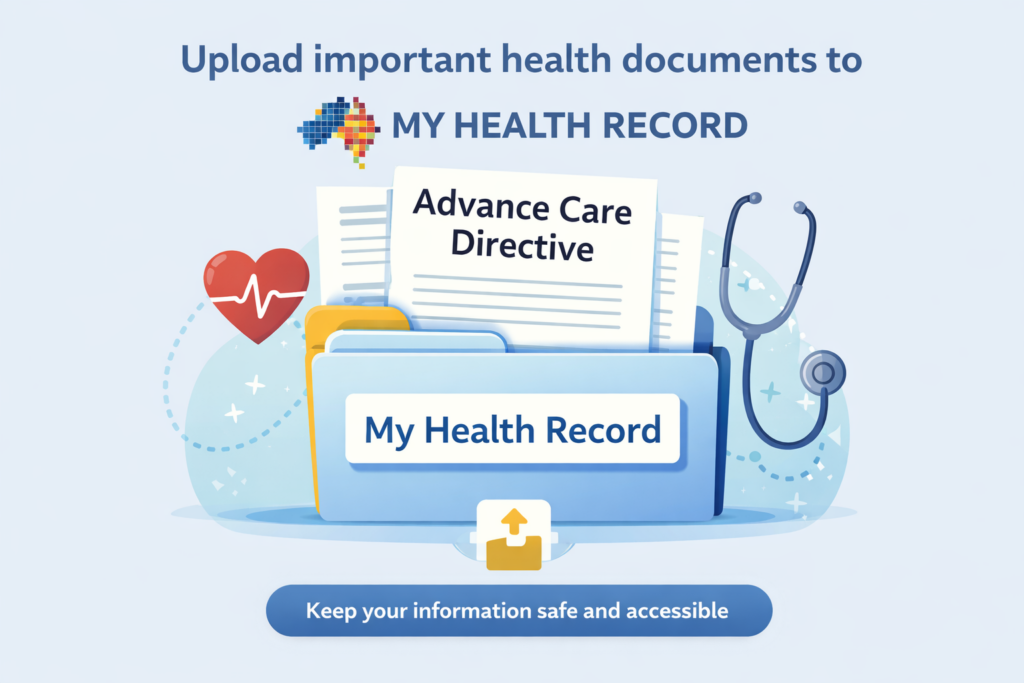
Health records: If you are injured or suddenly fall ill away from home, and need to be treated urgently, your medical records could be critical to the outcome of your treatment. That’s why it’s important to ensure they are accessible online. Talk to your doctor about this: see section 6.11 – Important Health Documents
Why a Will is not enough
If you are in an accident or become very ill, perhaps incapacitated, or even in a coma, who will pay your bills, arrange banking and otherwise manage your affairs? You need to appoint someone in writing to manage your finances (a Power of Attorney) AND a
document enabling someone to make healthcare decisions for you (an Enduring Guardianship and Advance Health/Medical Care Directive): see section 6.11 – Important Health Documents
Relationships
Relationships are part and parcel of social engagement, which is one of the main predictors of future health and quality-of-life referred to above: Social engagement.
They tend to change as we age. From our late 60s onward, there is often a noticeable shift in social behaviour. Some people become more forthright in their communication, expressing strong opinions with less concern for how they may affect others. This can lead to misunderstandings or rifts, especially in close relationships. Cognitive changes, reduced social inhibition, and a sense of “earned honesty” can all contribute.
There is an increasing tendency as we age to disengage from relationships that feel burdensome or misaligned. Sometimes this results in cutting ties (“de-friending”) without explanation or consideration for the feelings of the other person.
What to do – today – to improve your health
- Make a commitment to become more proactive and tell someone close to you about your decision, what you are going to do and when.
- Check those areas of your current health that are predictors of future health and quality-of-life to decide what areas you should focus on.
- Make a list of proactive steps you are going to take and when you are going to start on each one.
Below is a checklist for the 70s and a template for a proactive health plan that should be adapted by you for your specific circumstances, level of fitness and state of health. The more you cross-reference the links in this section to the relevant part of the Proactive Health Guide, the better your personal plan will be.
Proactive health checklist – for our 70s and ageing well
- Regular physical activity, preferably daily, including walking
- Weight-bearing exercise for muscles and bone health
- Work on mobility and flexibility (stretching, yoga, Pilates)
- Monitor cardiovascular health (BP, cholesterol, glucose, weight)
- Review medications with your doctor for interactions or side effects
- Stay hydrated – thirst cues weaken with age
- Get regular eye, hearing, and dental checks
- Monitor bone density and continue weight‑bearing exercise
- Protect balance with targeted exercises (single‑leg stands, tai chi)
- Maintain a nutrient‑dense diet with a variety of vegetables and legumes
- Stay mentally active (learning, reading, puzzles, hobbies)
- Pursue purposeful activities – having a purpose is important
- Keep social networks strong – loneliness is a major health risk
- Continue sun protection and skin checks; moisturise skin
- 7-9 hours of sleep per night for memory, mood and immunity
Your proactive plan
Putting a proactive health plan in writing is important if you want to improve your health. The more specific and detailed the plan is, the better. For example, instead of saying in column 2 “Aim for 150 minutes of moderate activity per week”, it will be more effective if you say something like “Walk 2km at a brisk pace each Wednesday and Saturday morning”. Instead of saying “Maintain a consistent sleep schedule” say “Go to bed at 10 PM and get up at 6:30 AM each day”.
You may want to do this on an Excel spreadsheet so that you can put in the starting date and add columns for each day of the month to keep track of how well you are progressing with your plan. Ideally, each day you will put a tick or a cross against each step that you have decided to embark on.
Remember, consistency is the key – it is better to do a little bit every day, and continue doing it until it becomes a habit – Healthy people have better habits – than to do too much and burn out. That means – don’t set your sights too high when you start.

You may also want to track changes to various aspects of your health after embarking on your plan: Track your progress.
| Proactivity focus | Details of what I am going to do | How often | Day 1 |
|---|---|---|---|
| Deep breathing – see section 6.3 Breathing | I breathe deeply [in for 4 seconds; hold for 4; out for 4; and hold again for 4] and do it for 1-2 minutes whenever I need a deep breathing boost. The trigger to remind me to do this is … [e.g. when I start to lose concentration OR when I feel tense or under stress OR when I don’t feel happy, etc] | Multiple times throughout the day | |
| Diet & nutrition – see section 2 Diet/Nutrition | I eat a wide variety of vegetables, fruits, legumes and whole grains by adding …. [state specifically what foods you are going to add to your diet] | Daily | |
| I limit sugar intake, processed foods and salt [be specific what you are going to reduce or eliminate from your diet] | Daily | ||
| I boost my microbiome with probiotic and prebiotic foods [state the specific foods e.g. fermented foods – yoghurt, sauerkraut, etc] | Daily | ||
| Exercise – see section 3 Physical Activity | I do 30 minutes of … [e.g. brisk walking] twice per week before breakfast | Tuesday & Friday | |
| I swim for 30 minutes once per week | Saturday | ||
| I do weights [or use resistance bands] to preserve muscle twice per week | Monday & Thursday | ||
| I do balance exercises (e.g. tai chi, yoga) twice per week | Saturday Wednesday | ||
| I play tennis [or golf, etc] once per week | Sunday | ||
| I do a minimum of 10,000 steps every day | Daily | ||
| Medications | I check for interactions or side effects with GP or pharmacist if there are any changes in the way I feel and for any new drug | Insert date | |
| Mental health | I stay mentally active by … (e.g. puzzles, reading) See section 4.2 | Daily | |
| I learn … [e.g. about the 100 years war OR a new language OR a musical instrument] | Daily | ||
| I work on brain health [specify what you are going to do] See cognitive training section 4.2 | Insert when | ||
| I work on being positive See section 5.2 | Insert when | ||
| I take part in a purposeful activity [ e.g. volunteering or a project such as renovating part of your garden] See section 4.2 | Insert date | ||
| Mindfulness – see section 5.3 Mindfulness | I engage in mindfulness regularly during each day. The trigger to remind me to do this is … [when I daydream OR when I find my posture is poor OR when I lose concentration OR when I walk through a doorway OR … etc] | Multiple times per day | |
| Screenings & check-ups | Blood test including PSA and blood sugar; Colonoscopy; Mammogram; Skin cancer check; Eye test; Bone density scan, etc | Insert dates (month and year) for each one | |
| Sleep hygiene – see section 6.1 Sleep | I go to bed at 10pm and get up at 6:30am | Each day | |
| No screens 1 hour before bed | Each day | ||
| Address snoring or sleep apnoea with GP | Insert date | ||
| Social connections | I join a community group or interest-based club [be specific about what and when] | Insert date | |
| I stay engaged with friends and family, or community groups [be specific about what you are going to do and when] See section 4.2 | Weekly or monthly | ||
| Symptoms & early warning signs | I monitor changes to the way I feel and keep a written record of any signs that I think are unusual. See section 7.2 | Ongoing | |
| Vaccinations – see section 6.8 Vaccinations | I get an annual flu and pneumonia shot; I get a Covid 19 booster | Insert date for each one | |
| Other | This is for other issues that may be important for you |
APPENDIX A
What your future health has in store for you and how you can shape it in your 70s
This appendix provides some simple ways to find out what your current health can tell you about your future health. There is no need for special equipment or expensive testing – most tests can be done at home and are free. There are also suggestions about what proactive steps to take depending on your results.
These predictive tests and proactive suggestions are based on a synthesis of data from medical research and population studies – including the Harvard Study of Adult Development and the WHO Healthy Ageing Frameworks – and accordingly they should be used as general guidelines rather than personalised advice.
PRELIMINARY: SELF-ASSESSMENT TEST
This test comprises one simple question: how you rate your current health? Excellent? Very good? Good? Fair? Poor?
A rating of “Fair” or “Poor” predicts higher risk of falls, functional decline, dementia and reduced independence. “Good, very good or excellent” predicts better mobility, stronger cognitive outcomes and longer independent living.
This is clearly a subjective test and, although it is a reasonably good predictor of future physical, emotional and cognitive health, it is not as accurate as the objective tests that follow. It also does not identify what areas of your health may need attention or what proactive steps would be of the most benefit. It is therefore a good idea to do the cognitive ageing test and the other individual tests below.
COGNITIVE AGEING TEST
It’s important to know how well your brain is likely to age, especially because the earlier you take steps to offset the chance of accelerated cognitive ageing, the more effective it will be. The research is clear – even people who score badly on the tests below can still meaningfully change their cognitive future by taking the right steps.
The tests, and what the results mean, are based on work done by Professor Anstey at ANU.
How to score
Please choose the option for each cognitive ageing test (1-15) that best describes you over the past 12 months and then tally the results based on the following scoring: low risk = 0 points; moderate risk = 1 point; high risk = 2 points (except for questions 3 and 4 where the score for high risk = 3 points).
What your total score means
How to interpret your results is explained after the last cognitive ageing test below. In general, the lower your total score for all the tests combined, the slower your “cognitive ageing” is likely to be. This means a higher likelihood of:
- staying mentally sharp and capable;
- learning, and remembering, new things more easily;
- managing complex tasks more effectively;
- being more adaptable e.g. to change and switching tasks;
- retaining mental resilience against stress and illness;
- ageing better e.g. remaining independent; and
- enjoying a higher quality of life for longer.
SECTION A: LIFESTYLE FACTORS
Test 1. Physical activity
- Low risk – I do 150 minutes or more of moderate physical activity per week or a minimum of 75 minutes of vigorous physical activity.
- Moderate risk – I do 60-150 minutes or more of moderate physical activity per week or a minimum of 30-75 minutes of vigorous physical activity.
- High risk – I do less than 60 minutes of moderate physical activity per week or less than 30 minutes of vigorous physical activity.
Proactive steps
Suggestions about physical activity can be found below under the individual aerobic and strength tests. If you would like additional information, there is more detail in the Exercise section above and more again in the resource section of the Guide: http://proactivehealthguide.com.au/3-exercise/#3-Exercise.
Test 2. Diet quality
- Low risk – I have a very good diet. I eat a variety of fruit, vegetables and whole foods on a daily basis.
- Moderate risk – My diet is not as good as described for the green zone. I consume less variety and some processed foods.
- High risk – I frequently consume processed foods and do not consume a wide variety of fruit, vegetables or whole foods.
Proactive steps
Suggestions can be found in the Diet and nutrition section above. If you would like additional information, there is more detail in the resource section of the Guide: http://proactivehealthguide.com.au/2-diet-nutrition/#2-DietNutrition.
Test 3. Alcohol
- Low risk – I have 10 or less standard drinks per week with no binge drinking.
- Moderate risk – I have 11-20 standard drinks per week or occasional binge drinking [5 or more standard drinks].
- High risk – I have 20 or more standard drinks per week or I binge drink at least once per week.
Proactive steps
Self-evident: reduce consumption.
Test 4. Smoking
- Low risk – I have never smoked OR I used to smoke but I quit more than 20 years ago and only ever smoked likely i.e. less than 5 cigarettes per day.
- Moderate risk – I am a very light smoker (1-2 cigarettes per week) OR I used to smoke but quit 5-20 years ago
- High risk – I smoke every day OR I smoke at least several cigarettes per day on a regular basis.
Proactive steps
Self-evident: reduce or, preferably, stop.
Test 5. Cognitive engagement
- Low risk – I engage in regular cognitive activities e.g. reading, learning, puzzles or hobbies.
- Moderate risk – I engage in occasional cognitive activity.
- High risk – I rarely engage in cognitive activity.
Proactive steps
Suggestions can be found in the Cognitive engagement section above.
SECTION B – MEDICAL and PHYSICAL FACTORS
Test 6. Blood pressure
- Low risk – My BP is normally less than 130/80.
- Moderate risk – My BP is normally in the range 130-139/80-89.
- High risk – My BP is normally more than 140/90 OR I am on blood pressure medication.
Proactive steps
Suggestions can be found in the Cardiometabolic health section above.
Test 7. Diabetes or pre-diabetes
- Low risk – I am neither diabetic nor pre-diabetic.
- Moderate risk – I am pre-diabetic.
- High risk – I am diabetic.
Proactive steps
Suggestions can be found in the Cardiometabolic health section above.
Test 8. Cholesterol
- Low risk – My LDL cholesterol is normal (less than 2.6).
- Moderate risk – My LDL cholesterol is between 2.6 and 3.3.
- High risk – My LDL is over 3.3 OR I am on lipid medication.
Proactive steps
Suggestions can be found in the Cardiometabolic health section above.
Test 9. Hearing
- Low risk – I have no difficulty hearing.
- Moderate risk – I have mild difficulty hearing and do not wear hearing aids
- High risk – I have significant difficulty hearing and do not wear hearing aids.
Proactive steps
If in any doubt, get tested. The tests are usually free of charge.
Test 10. Head injury and loss of consciousness
- Low risk – I have never had a head injury when I have lost consciousness.
- Moderate risk – I have had one head injury when I lost consciousness.
- High risk – I have had multiple head injuries when I lost consciousness.
Proactive steps
Protecting your head from future injury is critically important – repeated impacts carry the greatest long-term risk. Because head injury interacts with other risk factors, keeping your cardiovascular and metabolic health in good shape – including blood pressure, cholesterol, glucose, weight and physical activity – provides strong protection for the brain. Staying mentally active, socially engaged and maintaining good sleep habits all help build cognitive reserve and support long‑term brain health.
If you notice ongoing symptoms such as headaches, memory problems or difficulty concentrating, it’s wise to discuss them with a health professional.
SECTION C – PSYCHOLOGICAL and SOCIAL FACTORS
Test 11. Mood
- Low risk – My mood is generally stable i.e. I feel positive or neutral most days. Any ups and downs pass quickly and do not affect my motivation, relationships or daily activities.
- Moderate risk – I occasionally suffer from low mood in the sense of feeling down or flat but it lasts no more than a day or two before I bounce back. It does not affect my ability to work, socialise or manage daily tasks.
- High risk – At times I feel depressed or in a low mood that lasts for two weeks or more. It reduces my motivation, energy and enjoyment of life and affects my ability to concentrate. It affects my work, relationships or daily tasks. It means I lose interest, avoid social contact and sometimes feel overwhelmed by routine responsibilities.
Proactive steps
Regular routines, consistent sleep, daily physical activity and staying socially connected all help stabilise mood and reduce the stress hormones that accelerate cognitive ageing. Engaging your mind through reading, learning, hobbies or creative activities also helps build cognitive reserve. Reducing alcohol, managing stress and spending time outdoors can also make a difference.
If low mood is persistent, worsening or affecting your daily life, seeking support from a qualified health professional is important.
Test 12. Social connection
- Low risk – I meet most of the following criteria for this risk group: I have ongoing relationships and weekly contact with friends, family or groups in person, by phone or video; I have at least one person I can rely on for emotional or practical support; I participate in social, community or group activities at least monthly; I feel connected and not alone.
- Moderate risk – I meet most of the following criteria for this risk group: I have social contact with friends, family or groups in person, by phone or video at least once a month but they are not close or meaningful relationships; I have one person I can generally rely on for support but it feels limited or inconsistent; I sometimes feel alone or disconnected; I participate in social or community group activities occasionally but not on a regular basis.
- High risk – I meet most of the following criteria for this risk group: I have social contact with friends, family or groups in person, by phone or video less than once a month; I have no one I can generally rely on for support; I feel alone or disconnected much of the time; I lost my social network and have not rebuilt connections; I live alone and have very little social interaction.
Proactive steps
Suggestions can be found in the Social Engagement section above.
Test 13. Sleep
- Low risk – I have 7-9 hours of restorative sleep most nights.
- Moderate risk – My sleep is disrupted by stress or lifestyle factors OR I have difficulty falling asleep and/or staying asleep 1-2 nights per week.
- High risk – I regularly suffer from insomnia OR wake without feeling rested OR feel tired/sleepy most days OR I suspect I have sleep apnoea (snoring, gasping, pauses in breathing).
Proactive steps
Suggestions can be found in the resource section of the guide: Sleep.
SECTION D – COGNITIVE SELF-ASSESSMENT
Test 14. Memory
- Low risk – I forget things occasionally, but these lapses do not affect my daily tasks, and I am able to recall recent events, conversations and appointments with normal effort. My memory feels appropriate for my age.
- Moderate risk – I sometimes forget names, appointments or why I walked into a room, or I misplace items more often than I would like. These lapses are noticeable but not disruptive – they do not affect my day‑to‑day living, efficiency or reliability.
- High risk – I forget appointments or conversations regularly, or I repeat myself or ask the same questions without realising, or I often lose items or lose track of tasks, or I have difficulty following complex instructions. These lapses interfere with my day‑to‑day living, efficiency or reliability, and may be noticeable to others.
Proactive steps
Suggestions can be found under Cognitive engagement above and the links there to the resource section of the Guide.
Test 15. Attention/concentration
- Low risk – I can follow conversations, instructions and focus on tasks with normal effort.
- Moderate risk – I sometimes lose focus during long tasks and I occasionally need to re-read things but these lapses are intermittent and manageable.
- High risk – I have difficulty remaining focused even for short tasks and I frequently make mistakes due to inattention. These lapses interfere with my day-to-day life.
Proactive steps
Suggestions can be found under Cognitive engagement above and the links there to the resource section of the Guide.
INTERPRETATION OF RESULTS
Low risk: 0-10 points
Your lifestyle and health profile indicate healthy cognitive ageing. Maintain your healthy habits but continue to monitor risk factors i.e. those areas where you did not score well.
Moderate risk: 11-21 points
Your risk of faster cognitive ageing is increased. It’s never too late to modify the risk by taking steps to improve underperforming areas. Small changes now can significantly improve future cognitive health.
High risk: 22-32 points
You have many risk factors associated with faster cognitive ageing so it’s important to take steps as soon as possible to address underperforming areas.
AEROBIC CAPACITY
Aerobic capacity generally declines more rapidly in our 70s and is a strong predictor of long-term health including the risk of cardiovascular disease, future mobility, quality-of-life and even long-term brain health. You can do either the walking test (test 1) or test or the stair-climbing test (test 2), or both.
Test 1: Walk for 6 minutes
Walk briskly as far as possible in six minutes on a flat surface.
Outcome and what it predicts
- Green zone – being able to walk 500 metres or more without being overly puffed indicates good aerobic capacity for the 60s, lower long-term cardiovascular risk and slower biological ageing.
- Amber zone – 420-500 metres suggests below optimal aerobic fitness and higher risk of cardiovascular disease and reduced mobility in later decades.
- Red zone – less than 420 metres predicts a higher risk of heart disease and increased risk of frailty later decades.
Proactive steps
- Green zone – maintain at least 150 minutes of moderate activity per week including one long exercise session and one faster session per week
- Amber zone – aim for a brisk 30 minute walk five days per week and one 20 minute interval training session (1 minute fast; 1 minute easy)
- Red zone – aerobic activity needs to be increased starting with at least 10-15 minutes of brisk walking 4-5 days per week and gradually increase this until you reach 30 minutes. Your goal is to end up doing the activity recommended for the green zone.
Test 2: Stair climb – three flights
Time how long it takes to climb 3 flights at a steady pace.
Outcome and what it predicts
- Green zone – 60 seconds or less indicates good aerobic capacity and lower risk of future cardiovascular issues.
- Amber zone – 61-80 seconds suggests reduced aerobic capacity, higher future cardiovascular risk and reduced future mobility.
- Red zone – taking more than 80 seconds indicates significantly higher risk of heart disease and reduced functional capacity in later life.
Proactive steps
- Green zone – maintain regular aerobic activity, preferably at least 150 minutes per week of moderate activity (walking, cycling, swimming). Include one longer session (40-60 minutes) and one brisker session each week.
- Amber zone – aim for a brisk 30 minute walk five days per week or one 20 minute interval training session (1 minute fast; 1 minute easy). Ideally, include one stairclimbing session per week of 5-8 continuous minutes.
- Red zone – aerobic activity needs to be increased starting with at least 10-15 minutes of brisk walking 4-5 days per week and gradually increase this until you reach 30 minutes. Your goal is to end up doing the activity recommended for the green zone.
STRENGTH
It is recommended to do both the lower body (test 1) and the upper body (test 2), or both.
Test 1: Lower body: 30 seconds sit-to-stand
With arms crossed, stand up and sit down as many times as possible in 30 seconds from a standard chair seat (43-45 cm high).
Outcome and what it predicts
- Green zone –10 or more times indicates good lower‑body strength; good predictor of mobility in later decades.
- Amber zone – 8-9 times indicates higher risk of mobility limitations in the years ahead.
- Red zone – 7 or less times indicates a more significant decline in strength which predicts a higher risk of mobility decline, falls and reduced independence.
Proactive steps
- Green zone – do, or keep doing, at least 2 lower body strength sessions (e.g. squats, lunges, step-ups, sit-to-stand) per week each comprising 2-3 sets with 8-12 repetitions per exercise. It should feel moderately hard by the last few repetitions.
- Amber zone – lower body strength sessions (e.g. squats, lunges, step-ups, sit-to-stand) should be added to your exercise program starting with 2 sets of 8 repetitions per exercise once or twice per week and gradually increase the difficulty and the number of repetitions so you end up doing at least two sessions per week with each session comprising 3 sets of 12 repetitions.
- Red zone – follow the suggestions for the Amber zone but start with exercises that are not as difficult (e.g. partial squats and lunges, lower step-ups and sit-to-stand start using a higher chair); increase the frequency and difficulty gradually until you get to the level suggested for the green zone.
Test 2: Upper body: 1 minute of inclined push-ups
Place your hands on the edge of a kitchen bench or sturdy table, no wider than shoulder‑width. Walk your feet back until your body forms a 45° angle to the floor. Keep your body in a straight line from shoulders to heels. Then bend your elbows – keeping them angled back not flared out – and lower your chest stopping when your upper and lower arm form roughly a 90° angle. This should mean your chest is 10-15 cm from the edge. Then straighten your arms fully. This constitutes one full push-up.
Outcome and what it predicts
- Green zone – 10 or more incline push-ups for men, and 6 or more for women, in one minute indicates good upper‑body strength for the 70s, a lower risk of shoulder or neck issues and good long-term functional capacity (lifting, carrying, etc).
- Amber zone – 6-9 times for men, and 3-5 for women, in one minute indicates higher risk of mobility limitations in the 80s.
- Red zone – 5 or less times for men, and 2 or less for women, indicates a more significant decline in strength which predicts a higher risk of mobility decline, falls and reduced independence.
Proactive steps
- Green zone – do, or keep doing, at least 2 upper body strength sessions (e.g. push-ups, rowing and core exercises) per week each comprising 2-3 sets with 8-12 repetitions per exercise. It should feel moderately hard by the last few repetitions, and it is a good idea to add variety (e.g. different hand positions, tempo) every 6 to 8 weeks.
- Amber zone – upper body strength sessions (e.g. incline push-ups, rowing and core exercises) should be added to your exercise program starting with 2 sets of 8 repetitions per exercise once or twice per week and gradually increase the difficulty and the number of repetitions so you end up doing at least two sessions per week with each session comprising 3 sets of 12 repetitions.
- Red zone – follow the suggestions for the Amber zone but start with exercises that are not as difficult (e.g. wall push-ups, rowing exercises using resistance bands); increase the frequency and difficulty gradually over a period of a few months until you get to the level suggested for the amber zone and a few months later for the green zone.
CARDIOMETABOLIC HEALTH
Blood pressure; cholesterol; triglycerides; and blood sugar tests need to be arranged with your doctor and can usually be bulk billed. The proactive steps listed after Test 4 apply also to tests 1, 2 and 3.
Test 1: Blood pressure
Outcome and what it predicts
- Green zone – 130/80 or less indicates a lower long-term risk of heart attack, stroke and kidney disease.
- Amber zone – 130-139 systolic or 80-89 diastolic (e.g. 135/85) indicates a higher chance of developing hypertension and higher cardiovascular risk unless reduced.
- Red zone – 140/90 or higher predicts a higher risk of heart attack, stroke and kidney disease and a higher likelihood of needing medical treatment. In our 70s, this is a strong indicator that proactive steps should be taken.
Test 2: Cholesterol
Bad cholesterol (LDL) and what it predicts
- Green zone – less than 2.6 predicts a lower chance of cholesterol building up on the artery walls and lower long-term risk of heart attack or stroke.
- Amber zone – 2.6-3.3 indicates an increased likelihood of plaque build‑up and a higher chance of developing cardiovascular disease in the years ahead.
- Red zone – above 3.3 indicates a stronger likelihood of plaque formation and higher much higher risk of heart attack and stroke. In our 70s, this level is a strong signal that proactive steps are needed.
Good cholesterol (HDL) and what it predicts
- Green zone – more than 1.0 for men 1.2 for women indicates better natural protection against cholesterol build‑up and lower cardiovascular risk..
- Amber zone – 0.9-1.0 indicates reduced protective effect and a higher chance of cholesterol accumulating in arteries.
- Red zone – less than 0.9 indicates little natural protection and higher long‑term risk of cardiovascular disease. Low HDL is an important warning sign and should not be ignored.
Test 3: Triglycerides
What they predict
- Green zone – less than 1.7 indicates a healthy metabolism and lower risk of artery inflammation. In our 50s indicates better long-term cardiovascular health.
- Amber zone – 1.7-2.2 indicates a higher chance of cholesterol accumulating in arteries and therefore increased cardiovascular risk in the coming decade.
- Red zone – 2.3 and above indicates higher risk of heart disease, stroke and diabetes.
Test 4: Blood sugar
The following relates to HbA1c – a measurement of blood sugar averaged over the last 2-3 months. It is a better predictor of long-term health than fasting glucose level which is a snapshot of the sugar level at the time of the test.
What it predicts
- Green zone – less than 5.7% indicates lower risk of developing insulin resistance or type 2 diabetes.
- Amber zone – 5.7-6.4% indicates higher chance of developing type 2 diabetes.
- Red zone – 6.5% and above indicates a higher risk of cardiovascular disease including diabetes. This level in the 70s indicates that proactive steps should be taken.
Proactive steps for blood pressure, cholesterol, triglycerides and blood sugar
- Green zone – maintain a healthy lifestyle including regular physical activity (at least 150 minutes per week walking, cycling, swimming, or similar); 2 strength sessions per week for upper and lower body; a balanced diet with a variety of fruits and vegetables; and a consistent sleep routine.
- Amber zone – the goal is to have a healthy lifestyle as described for the green zone including the adoption of a Mediterranean style diet; increasing fibre; reducing salt and processed foods. Also, if overweight, the goal should be a 5-10% weight reduction.
- Red zone – in addition to the recommendations for the amber zone, it is wise to consider medical advice relating to diet and possible medication.
More information about cardiometabolic health and how to improve it can be found above.
STRESS and EMOTIONAL REGULATION
Test 1: Sleep
Sleep is a strong predictor of long-term physical, emotional and cognitive health. The simple test involves calculating how many nights per week you: fall asleep within 30 minutes; stay asleep without long waking periods; and wake up feeling reasonably restored?
Outcome and what it predicts
- Green zone – 5-7 nights per week indicates a well‑regulated stress system and emotional stability, lower risk of depression/anxiety, better cognitive ageing and lower risk of long-term cardiovascular disease.
- Amber zone – 3-4 nights per week indicates a higher chance of developing chronic stress and sleep problems, increased risk of weight gain and reduced emotional resilience, including irritability, in the next decade.
- Red zone – 2 or less nights per week indicates higher long-term risk of depression/anxiety, higher risk of a weaker metabolism (including diabetes), increased cardiovascular risk and faster cognitive ageing. It is a strong warning sign that should not be ignored.
Proactive steps
- Green zone – maintain a consistent sleep schedule and avoid bad habits that sometimes creep up such as phone or TV screens close to bedtime, late coffee, etc.
- Amber zone – advisable to adjust sleep habits, including consistent bed and wake times, limit caffeine after midday, reduce screen time 30-60 minutes before bed – [link to sleep]; increase physical activity (1-2 extra sessions of light to moderate activity per week) and reduce alcohol intake (even small reductions help) (e.g. 20 minutes walking per day).
- Red zone – sleep hygiene needs to be given priority – [link]; add the following to your daily routine: relaxation practices; more physical activity; and stress management. Consider professional sleep therapy advice if poor sleep persists, especially if it affects mood, energy or daily function.
Test 2: Resting heart rate
Your BPM (beats per minute) can be tested by counting your pulse to determine how many mornings per week your resting heart rate in the healthy range for your age – measure it first thing in the morning, before getting out of bed. It will give you an indication of your levels of stress and cardiovascular issues.
Outcome and what it predicts
- Green zone – 60-72 bpm 5-7 mornings per week indicates lower long-term cardiovascular risk; better stress resilience; low risk of developing high blood pressure; and better long-term cognitive and emotional stability.
- Amber zone – 73-82 bpm 3-4 mornings per week indicates that your 60s is likely to involve a higher likelihood of chronic stress; higher chance of developing hypertension; and increased long-term cardiovascular risk (if the trend continues).
- Red zone – above 82 or below 60 bpm on 3 or more mornings per week indicates an even higher long-term risk of heart disease and stroke; higher likelihood of chronic stress; and greater risk of fatigue, burnout and emotional dysfunction over time.
Proactive steps
- Green zone – maintain a healthy lifestyle including regular physical activity (both aerobic and strength 2-3 times per week), consistent sleep habits and stress management routines (breathing, stretching and time outdoors).
- Amber zone – consistent sleep (bed and wake-up times); increase physical activity (1-2 extra sessions of light to moderate activity per week such as a daily 20 minute brisk walk, cycling or swimming); reduce alcohol intake (even small reductions help); stress management (breathing, stretching and time outdoors).
- Red zone – increase exercise and manage stress (see Amber zone); give priority to sleep quality; reduce alcohol and caffeine; consider discussing persistent high RHR with a GP.
Test 3: Perceived stress
This test involves a self-assessment of your stress level by applying a score of 0-2 to each of the following statements. You need to rate how often each statement has been true over the previous two weeks. A score of 0 = never; 1 = sometimes; and 2 = often. Then add up the total of all five items:
- I’ve felt overloaded or under pressure.
- I’ve found it hard to switch off mentally.
- I’ve felt tense, wound‑up, or on edge.
- I’ve felt that small things have irritated me more than usual.
- I’ve felt tired in a way that rest didn’t fully fix.
Outcome and what it predicts
- Green zone – a score between 0 and 3 on one or less days per week means you’re managing stress well. Such strong emotional stability is good for your brain health.
- Amber zone – a score of between 4 and 6 means on 2-3 days per week indicates you’re carrying a moderate stress load and small changes now can prevent chronic stress patterns.
- Red zone – a score of between 7 and 10 on 4-7 days per week means your stress level is high and indicates a high risk of burnout, mood problems and stress related physical health issues. Your system is overloaded and more vulnerable to fatigue, poor sleep and emotional exhaustion.
Proactive steps
- Green zone – maintain routines that support calmness (walking, nature, hobbies); retain boundaries around work and personal time; maintain habits that keep stress low such a simple daily pauses and deep breathing.
- Amber zone – identify one or two sources of stress you can reduce; add daily relaxation practices; increase light physical activity; improve sleep consistency and strengthen social connections.
- Red zone – give priority to rest, sleep, and recovery; add structured daily relaxation (breathing, guided relaxation, stretching); reduce non‑essential commitments where possible; increase physical activity (such as walking, yoga). If the stress is persistent or overwhelming, discuss with your GP.
APPENDIX B
Physical health issues in our 70s
- Arthritis: In our 70s, arthritis can significantly impact mobility, balance, and independence. Almost half of Australians aged 75+ live with arthritis. Symptoms may include persistent joint pain, visible swelling and difficulty with stairs or grip strength. Treatment includes tailored exercise programs (including strengthening muscles to support joints) and/or medications like NSAIDs or corticosteroid injections. Early referral to a rheumatologist is recommended if symptoms escalate or involve multiple joints (see section 8.5 – Arthritis).
- Bone health: Post-menopausal women and those with osteoporosis risk factors who have not had a bone density scan previously should discuss this with their GP. Maintain calcium (1,200 mg/day) and vitamin D (800–1,000 units/day).
- Cardiovascular: It is important to maintain regular aerobic and strength-based exercise (Physical activity) and to monitor blood pressure, cholesterol, and blood sugar annually (8.3 Heart disease and 8.4 High blood pressure). See also disease and illness risks below.
- Cognitive changes: Mild memory lapses may begin; learning new information becomes harder, partly because of brain shrinkage and deteriorating connections between the neurons. This can result in slower recall and difficulty in multitasking.
- Diet, nutrition and hydration: Focus on nutrient-rich foods, fibre, lean protein and healthy fats. Aim for 6-8 cups per day of fluids. See section 2 Diet and nutrition.
- Hearing and vision: Cataracts, glaucoma and age-related hearing loss increase.
- Heart disease: See Cardiovascular above.
- Hormonal changes: Postmenopausal and testosterone-related shifts may affect emotional well-being and metabolism. Nutrition, exercise, sleep, and stress management are all relevant for dealing with this. So is feeling engaged with life and connected to others, important factors in regulating stress hormones like cortisol.
- Injury management: Warm up and cool down before and after exercise. Soreness may reflect inflammation – use ice for the first 48 hours, then consider heat therapy. Both ice and heat should be applied for only 15 to 20 minutes and not again for one hour. Both should be applied through protective material to avoid skin damage.
- Muscular health: Maintain regular stretching, balancing and strengthening exercises, especially core and glute strength to support posture, and prevent back pain, and weight bearing exercises to slow muscle loss and support joint stability (section 3 – Physical activity.
- Osteoarthritis: See Arthritis above
- Osteoporosis: See Bone Health above
- Physical activity is essential for good health (see section 3 Physical activity) and, ironically, it will actually increase available energy for future use. This is because of the effect it has on your mitochondria – the tiny “batteries” in your cells that convert food into energy. Resistance or weight-bearing exercise strengthens those little batteries, and aerobic exercise (e.g. fast walking) will multiply the number of batteries (see section 3.4 Mitochondria).
- Respiratory: Breathing problems, such as chronic bronchitis and emphysema, become more common, often undiagnosed until breathlessness starts to affect daily activities. Asthma may also worsen due to reduced lung elasticity. Screening involves lung function tests and symptom tracking. Vaccinations (flu and pneumococcal) are essential to reduce complications.
- Sleep quality: Sleep may become lighter and/or more fragmented. If ongoing tiredness, consider a sleep assessment to rule out apnoea or other disruptions (see section 6.1 Sleep). If you feel more than tiredness, and it persists for more than 2 weeks, talk to your GP – it could be fatigue. Arthritis: Almost half of Australians aged 75+ live with arthritis, which has a significant impact on mobility, balance and independence. Symptoms may include persistent joint pain, visible swelling and difficulty with stairs or grip strength. Treatment can include tailored exercise programs including strengthening muscles to support joints, and medications like NSAIDs or corticosteroid injections: see section 8.6 – Arthritis.
APPENDIX C
Disease & illness risks in our 70s
- Cancer: See recommendations for various cancer screenings in Recommended screenings above.
- Diabetes (Type 2): Risk remains high so monitor blood sugar, particularly if you have a family history, if you start putting on weight or do not do regular exercise. More regular screening becomes important.
- Heart disease: The risk of heart failure, arrhythmias and vascular disease increases as blood vessels stiffen and blood pressure rises so it’s important to monitor symptoms of heart disease (breathlessness, swelling, etc); maintain healthy weight; avoid processed foods, smoking and excess alcohol (see section 8.3 – Heart disease and stroke); get your blood pressure checked and have an annual blood test including blood sugar and cholesterol. Ask your GP about a calcium score to gauge whether there are any blockages that can be present even when cholesterol is within the acceptable range.
- Medication safety: Some people need to take multiple medications at the same time. This increases the risk of side effects and adverse interactions between drugs so, if they are prescribed by different doctors, it’s very important for your GP or pharmacist to review your medications periodically.
- Mental health: Loneliness, grief and cognitive changes may need to be addressed including the risk of depression, anxiety and dementia. Changes are often linked to retirement, isolation or caregiving stress. It’s important to continue with social connections and purposeful activities which regulate stress hormones. If you notice any cognitive impairment or mood swings, it’s a good idea to talk to your GP about screening. Consideration should be given to advanced care planning [see Health Records and Directives above].
- Osteoporosis becomes more common, especially for post-menopausal women. Bone density scans may be warranted. Management includes calcium, vitamin D, weight-bearing exercise and sometimes medication.
- Pelvic, urinary and sexual health:Urinary incontinence, pelvic organ prolapse and sexual health concerns may become relevant. It may also become advisable to review continence aids and pelvic floor support; consider topical hormone therapies; address sexual wellbeing, relationship and intimacy needs.
- Stroke: occurs when blood flow to the brain is interrupted, either by a blockage or a bleed. As a test of whether someone has had a stroke, remember the acronym: F.A.S.T. Face (drooping), Arm (weakness), Speech (difficulty), and Time (to call emergency services – fast!). Other symptoms may include sudden confusion, vision changes, dizziness or severe headache. The most vulnerable group is those aged 65 and older, with 71% of stroke cases occurring in this bracket. To reduce risk, regular health checks are essential – particularly for blood pressure, cholesterol and heart rhythm. Lifestyle changes such as quitting smoking, maintaining a healthy weight, staying active and managing chronic conditions like diabetes can dramatically lower stroke risk. If atrial fibrillation (irregular heartbeat) is present, medical management is crucial to prevent clot formation. Stroke prevention is possible: over 80% of strokes are preventable with proactive care.
- Thyroid: Thyroid hormones regulate metabolism, so imbalances can lead to symptoms like fatigue, weight changes, mood shifts and temperature sensitivity. The risk of a thyroid disorder increases in our 60s and can be detected by a blood test. Consistent treatment means people can live normal lives but, untreated, it can lead to complications such as heart failure, stroke, infertility or severe depression.
APPENDIX D
Physical activity guidelines (65 and older)
Guidelines have been issued by the Australian Department of Health, Disability and Ageing: https://www.health.gov.au/topics/physical-activity-and-exercise/physical-activity-and-exercise-guidelines-for-all-australians/for-older-australians-65-years-and-over